If you caught Jose's video on Instagram, you've got the gist: tiny needles, tiny punctures, and your skin decides to rebuild. It sounds intense. It's actually one of the more sensible things you can do for texture and scarring, as long as you walk in with the right expectations.
What It's Actually Doing
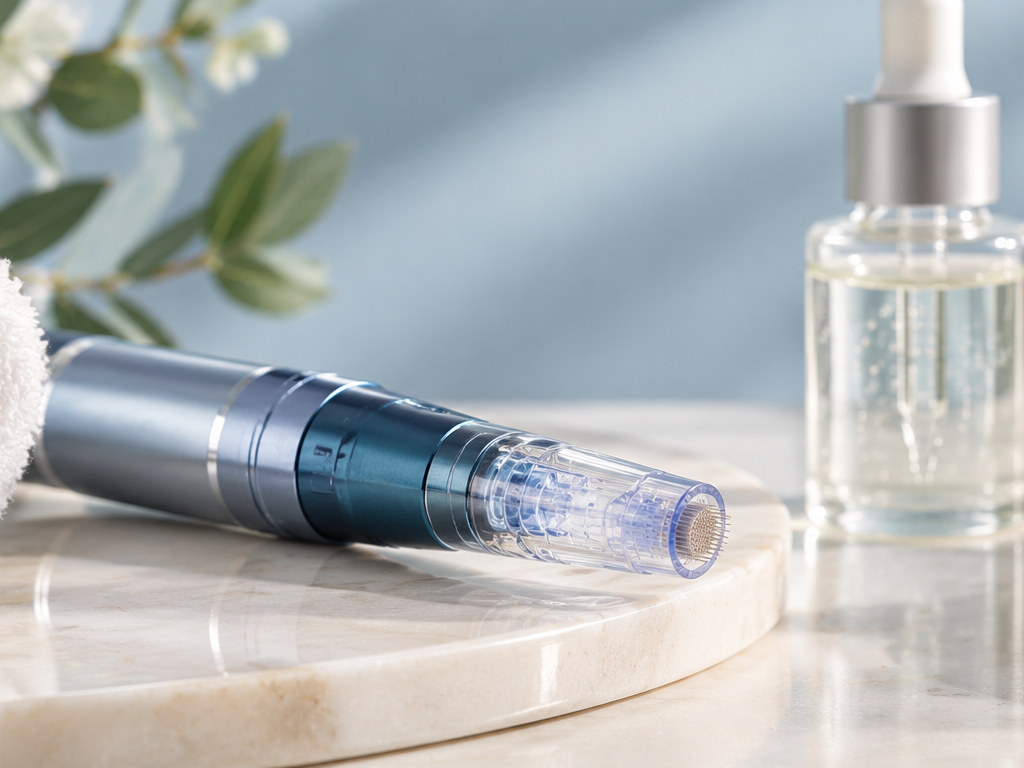
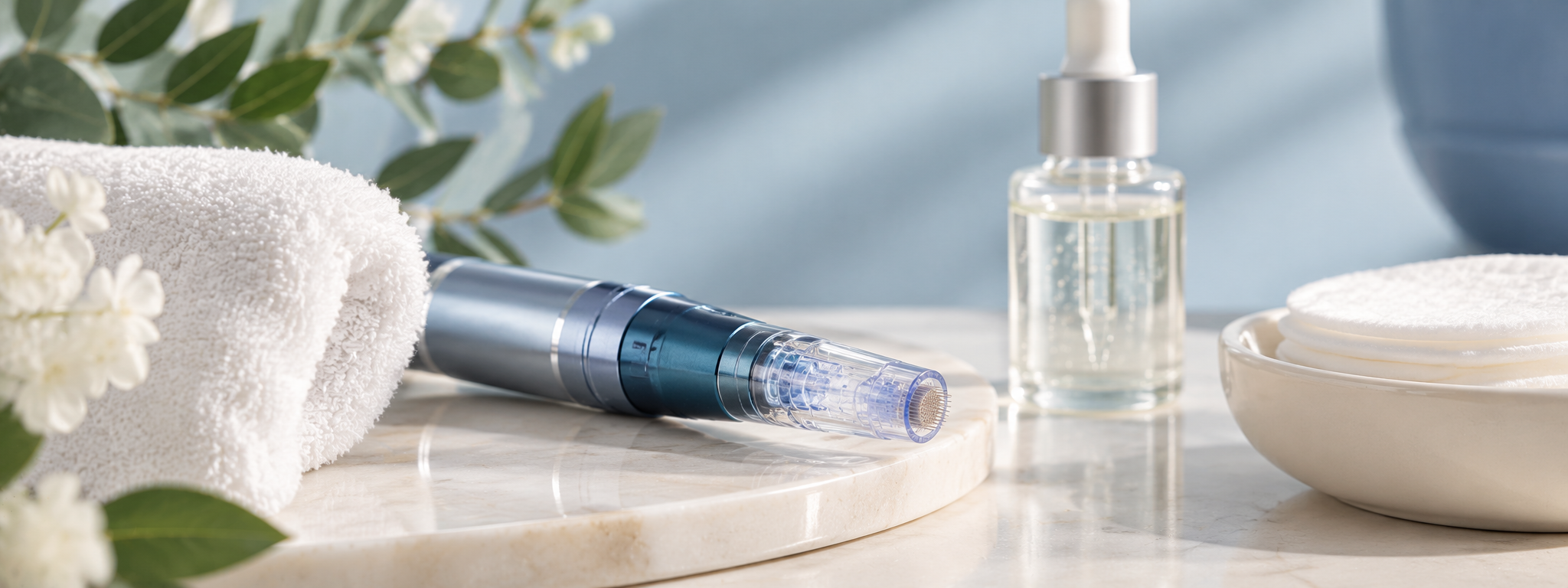
Microneedling (also called collagen induction therapy) uses a device with very fine, sterile needles to make thousands of controlled micro-punctures in your skin. Your skin treats them like tiny wounds and does what it always does. It repairs them, and makes new collagen and elastin while it's at it.
That's the whole trick. No magic serum, no mystery, just your skin overreacting in a very productive way. Professional devices are FDA-regulated medical devices, which is a very different thing from the roller in your bathroom drawer. (Here's our microneedling treatment page if you want the studio details.)
What It's Good For (and What It Isn't)
Acne scars: the indented kind is where microneedling has the strongest research. Think improvement, not erasure.
Texture and tone: rough, bumpy or uneven skin can look smoother and more even.
Fine lines: a gradual softening. Not a lift.
Pores, other scars, stretch marks: possible, but results vary more from person to person.
What it won't do: erase anything, replace a facelift, treat active breakouts, or last forever. Collagen keeps breaking down with age, so results fade over time.
What to Actually Expect
Before: a consultation first, then pre-care instructions like pausing retinoids and skipping sun and tanning
During: numbing cream, then a prickling sensation most people find very manageable
After: a mild-sunburn look for a few days to a week, then some light flaking. No makeup for 24 hours, sunscreen daily, and hands off the peeling skin
Results: some change within a few weeks, full results over several months, usually across a series of sessions
Side effects: mostly temporary. Less often, dark patches, infection or scarring, which is exactly why a trained provider and real aftercare matter
Why It's Not for Everyone
Skip it if you heal poorly, have had keloid scars, have a weakened immune system, or are being treated for skin cancer or getting radiation in the area. Hit pause if you have a tan, a skin infection, painful or deep breakouts, or recent isotretinoin (Accutane) use.
Microneedling is considered safe for all skin tones, but darker skin carries a higher risk of pigment changes, so technique and aftercare matter even more. That's not something to guess about. It's what the consultation is for. (Here's why we always start there.)
And on price: we're not going to quote a number before we've seen your skin. Session count depends on what you're treating, so a real plan beats a menu guess every time.
The Bottom Line
Microneedling isn't a miracle, and it isn't scary. It's a well-studied way to nudge your skin into rebuilding, with results that show up gradually and honestly. Sometimes it's the right tool. Sometimes a VI Peel or a personalized facial will do more for you, and we'll tell you so.
If you're considering microneedling in San Mateo, book a consultation and get a plan built for your skin, not a package plucked from a menu.
📍 3168 Campus Drive, San Mateo, CA 94403
📅 Book: booking.mangomint.com/blumonarchskinstudio
📷 Follow along: @blumonarchskinstudio
Get in touch
📍 3168 Campus Drive, San Mateo, CA 94403
📞 650-554-0398
Follow us!
Read another!